Hardwood Floor Sanding and Refinishing in Scranton, PA
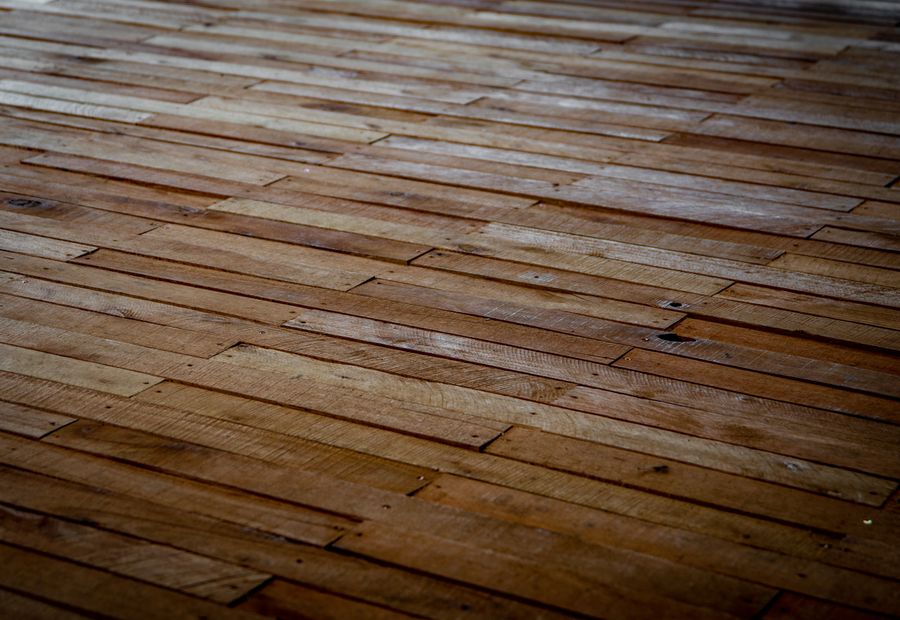
Sanding and refinishing is the core of what we do. It takes a floor that has lived through decades of foot traffic, furniture moves, pet claws, and spilled coffee, and brings it back to bare wood. Then a fresh finish locks in that new surface for another 10 to 15 years. In Scranton, where over half the homes were built before 1939, the floors underneath are almost always worth this work. Old-growth red oak and white oak from that era are denser and harder than anything available at a lumber yard today.
What Sanding Actually Does
A drum sander makes multiple passes over the floor, starting with a coarse grit to strip old finish, scratches, and surface damage, and progressing to finer grits for a smooth surface. Edges and corners are done by hand with an edger and detail sander. The result is clean, bare wood ready for stain (if desired) and finish coats. The process also levels out minor unevenness in the floor surface.
Why Old-Growth Hardwood Is Worth Refinishing
The hardwood in a 1920s Scranton home was milled from trees that grew for a century or more. That slow growth produced tight grain and exceptional hardness. A modern red oak plank from a plantation-grown tree is measurably softer and less dense. When you sand and refinish old-growth hardwood, you are preserving material that literally cannot be purchased new. Replacement with modern stock is a downgrade in quality, and it costs more than refinishing.
The Process, Step by Step
We start with an on-site inspection to check the floor condition, moisture levels, species, and thickness. You get a written estimate with the exact scope and price. On the job day, we move furniture, seal doorways, and protect baseboards. Sanding takes one day for most rooms. If you are adding stain, that is applied the next day after you approve a test patch. Then two to three coats of polyurethane go on with light sanding between coats. You can walk on the floor in socks within 24 hours of the final coat.
Choosing a Finish
Oil-based polyurethane adds warmth and amber tone. It is extremely durable and costs less per coat. Water-based polyurethane dries clear with lower odor and faster recoat times. Penetrating oil finishes give a matte, natural look with easy spot repairs. We carry all three and apply test sections so you can see the difference on your own wood before committing. For most red oak floors in this area, oil-based satin poly is the standard recommendation. For white oak where you want to preserve the natural cool tone, water-based is the better choice.
What It Costs
Basic sand and refinish runs $3 to $6 per square foot. A typical room (250 sq ft) runs $750 to $1,500. A whole-house job (1,200 sq ft) runs $3,600 to $7,200. Adding custom stain brings the range to $4 to $8 per square foot. Scranton-area data shows an average job cost of $1,148 to $1,390 for standard scope work. Every job gets a free estimate before any work begins.
Ready to see what your floors can look like? (570) 880-0823 gets you a real person and a free estimate.
How many times can hardwood floors be refinished?
Three to five times over their lifetime, depending on the original thickness of the wood. Old-growth hardwood in Scranton's pre-war homes is typically thick enough for multiple refinishes. We measure the remaining thickness during inspection to confirm.
Do you move the furniture?
Yes. We move standard furniture out of the work area and put it back when the floors are ready. Disconnect electronics and fragile items beforehand. Pianos and extremely heavy pieces may require a separate arrangement.
Can you refinish engineered hardwood?
It depends on the wear layer thickness. Engineered hardwood with a wear layer of at least 2mm can usually be sanded once. We check the spec before committing, and we will be honest if yours cannot be safely sanded.
How much dust should I expect with traditional sanding?
Traditional sanding produces fine wood dust that settles across the whole house for days. We seal doorways and vacuum thoroughly, but some migration is unavoidable. If that is a problem for your household, ask about dustless refinishing, which captures roughly 99% at the sander.
What if my floor has been sanded too many times already?
We measure remaining thickness above the tongue during the free inspection. If there is less than about 1/32 inch left, sanding risks exposing the tongue and the fasteners. In that case we will tell you plainly and talk through board replacement or an overlay instead of selling you a sand that ruins the floor.