Hardwood Floor Repair in Scranton, PA
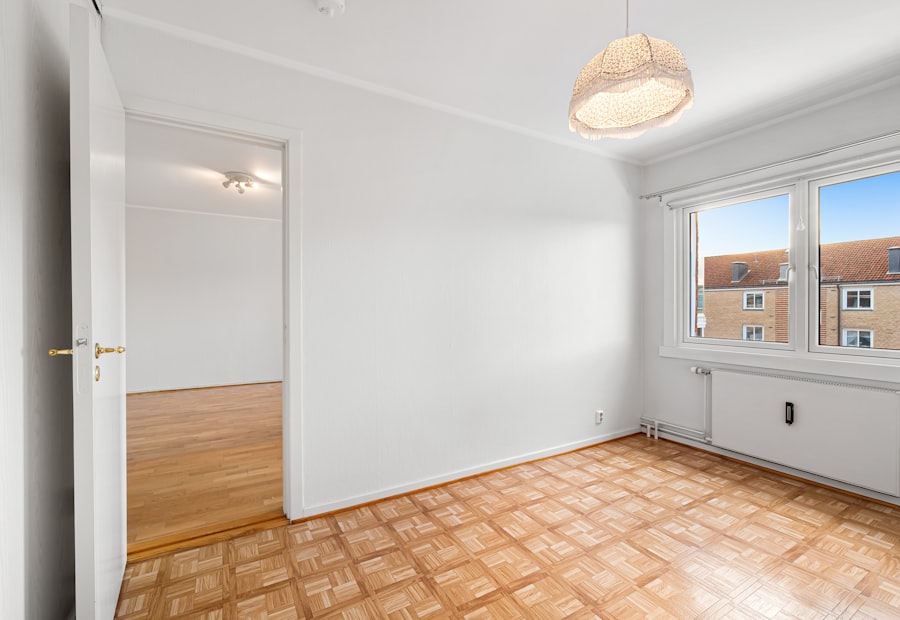
A hardwood floor that has been walked on for 80 or 100 years collects its own set of problems. Some are cosmetic: a scratched board, a dent from a dropped cast iron pan, a stain that sanding alone cannot remove. Others are structural: a board cracked by old nail pops, gaps between planks that grew wider as the house settled, squeaks that announce every trip to the bathroom at night. Repair work fixes these problems individually, often as part of a full refinishing project.
Board Replacement
When a board is cracked, rotted, or damaged beyond what sanding can fix, we remove it and weave in a replacement cut from species-matched stock. In Scranton's older homes, this usually means red oak or white oak in widths and thicknesses that match the original installation. The new board is installed, sanded flush with the surrounding floor, and finished to blend in. Done properly, you will not be able to find the replacement after the finish is applied.
Gaps Between Planks
Gaps are normal in old hardwood floors. Wood expands and contracts with humidity, and over decades the cumulative movement creates visible spaces between planks. Narrow gaps (less than the width of a nickel) are typically cosmetic and best left alone, since filling them creates a new problem when the wood expands in humid months. Wider gaps can be filled with flexible wood filler or thin wood strips, depending on the size and the homeowner's tolerance for imperfection in an old floor.
Squeaks and Nail Pops
Squeaks happen when a loose board rubs against its neighbor or the subfloor. The fix depends on access: if there is an unfinished basement or crawl space below, we can often silence the squeak from below with screws or shims without touching the floor surface. Nail pops, where old cut nails push up above the floor plane, are reset and filled. Both repairs are routine in homes of this age.
When Repair Is Part of a Refinish
Most board repair happens alongside a full refinishing project. When the old finish comes off, hidden damage becomes visible: hairline cracks, stains that go deeper than the surface, soft spots from old moisture damage. We identify these during sanding and quote the repair as a separate line item so you know exactly what it adds to the project. The repaired sections are then sanded and finished along with the rest of the floor, and the patch disappears completely under the new finish.
What It Costs
Board replacement runs $8 to $15 per square foot for the repaired area, depending on species matching and accessibility. Gap filling and squeak repair are typically quoted as part of a broader refinishing job. Standalone repair work (without a full refinish) is quoted on a per-project basis during the free estimate. In most cases, the repair is a small add-on to a full refinish rather than a standalone project. We break it out as a separate line item so you can see exactly what the repair portion costs versus the refinishing work.
Have a floor problem you want fixed? Call (570) 880-0823 and describe what you are seeing. We will tell you what it takes to fix it.
Can you match the species and width of my old flooring?
In almost all cases, yes. Red oak and white oak in standard widths are readily available. For unusual species like chestnut or non-standard widths, we source salvaged or specialty stock. The match is confirmed before installation.
Should I fill every gap in my old floor?
Not necessarily. Narrow seasonal gaps are normal and are best left alone. Filling them with rigid material creates buckling when the wood expands. We fill gaps that are large enough to collect debris or that the homeowner finds objectionable, using flexible filler that moves with the wood.
Can you fix a squeak without pulling up the floor?
Often yes. If we can reach the subfloor from a basement or crawlspace below, squeaks are fixed from underneath with shims and screws, which leaves the finished floor untouched. When there is no access from below, the fix is done from the top and is best combined with a refinish.
Where do you source matching boards for a 1920s floor?
We match species, width, and grain orientation from salvaged and reclaimed stock, which is usually the only way to match old-growth oak or chestnut. New plantation-grown oak is a different density and reads differently under finish. If we cannot get a true match we tell you before starting.
Is board replacement worth it, or should I replace the whole floor?
Almost always worth it in this area's housing stock. Replacing a few boards in an old-growth oak floor costs a fraction of new flooring and preserves wood you cannot buy today. Full replacement only makes sense when damage is widespread or the boards have been sanded past their usable thickness.